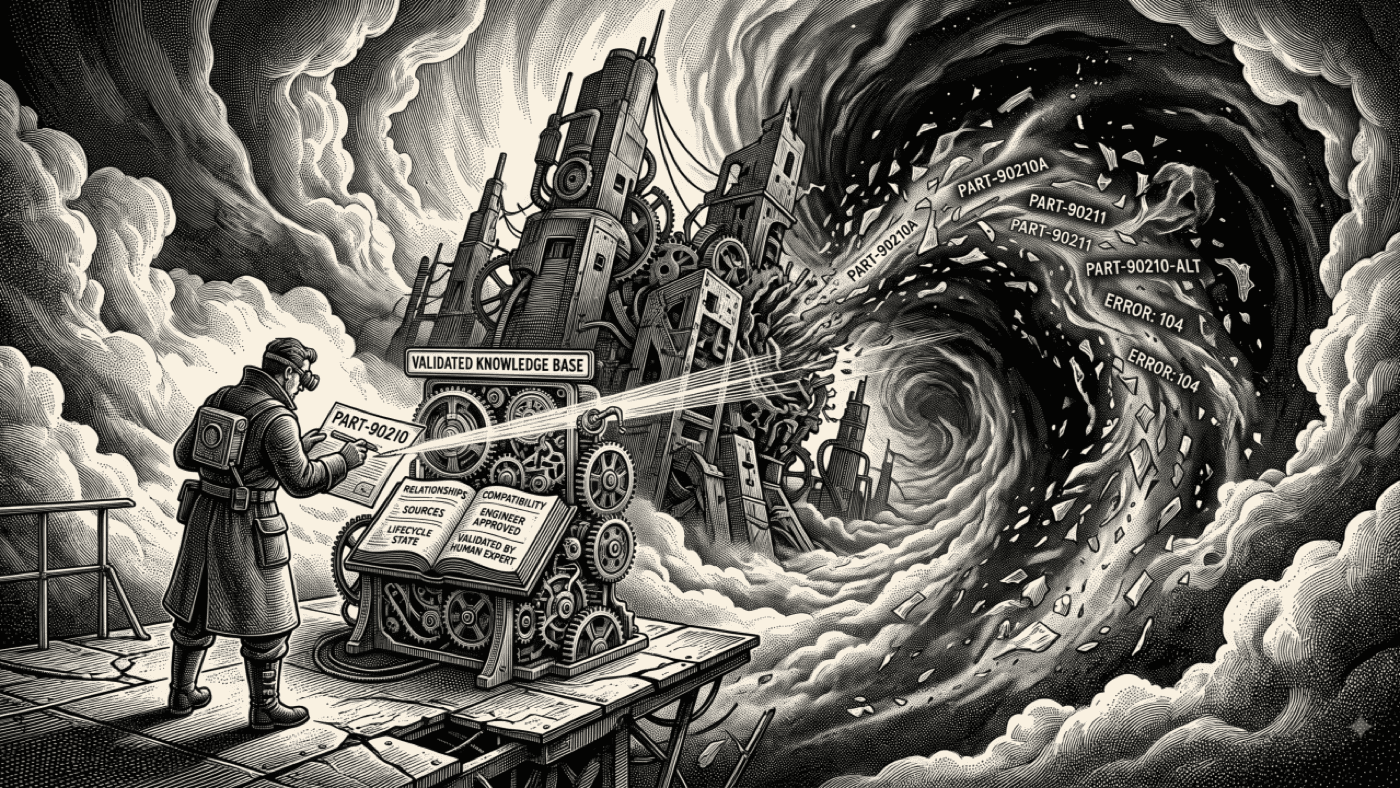
We ran a demo last week for a customer who’d taken the same use case to three other vendors first. It worked. The demo was basically over in ten minutes and he spent the next half hour asking where the answers came from and why we were so precise vs other vendors and generic LLMs.
There’s a line in the IoT Analytics mid-2026 pulse check that explains why. Non-deterministic LLM behavior is still a barrier to adoption, and they’re specific that it bites hardest in high-precision and regulated industries with strict validation standards, which is a description of most of industrial automation.
Non-determinism just means the same question can give you different answers. Ask a model to cross a discontinued part twice, get two part numbers, both plausible, identically formatted, one of them wrong. That’s ok for a marketing tool. On a purchase order it’s a return, a line waiting on a part, and a customer who from then on will have to at best double check every order she gets, or at worst shop somewhere else.
A raw output from an advanced frontier LLM makes this harder, not easier. Same error, more confidence, and now it survives review because it reads like it was written by someone who knew, even quoting articles or documents from the web.
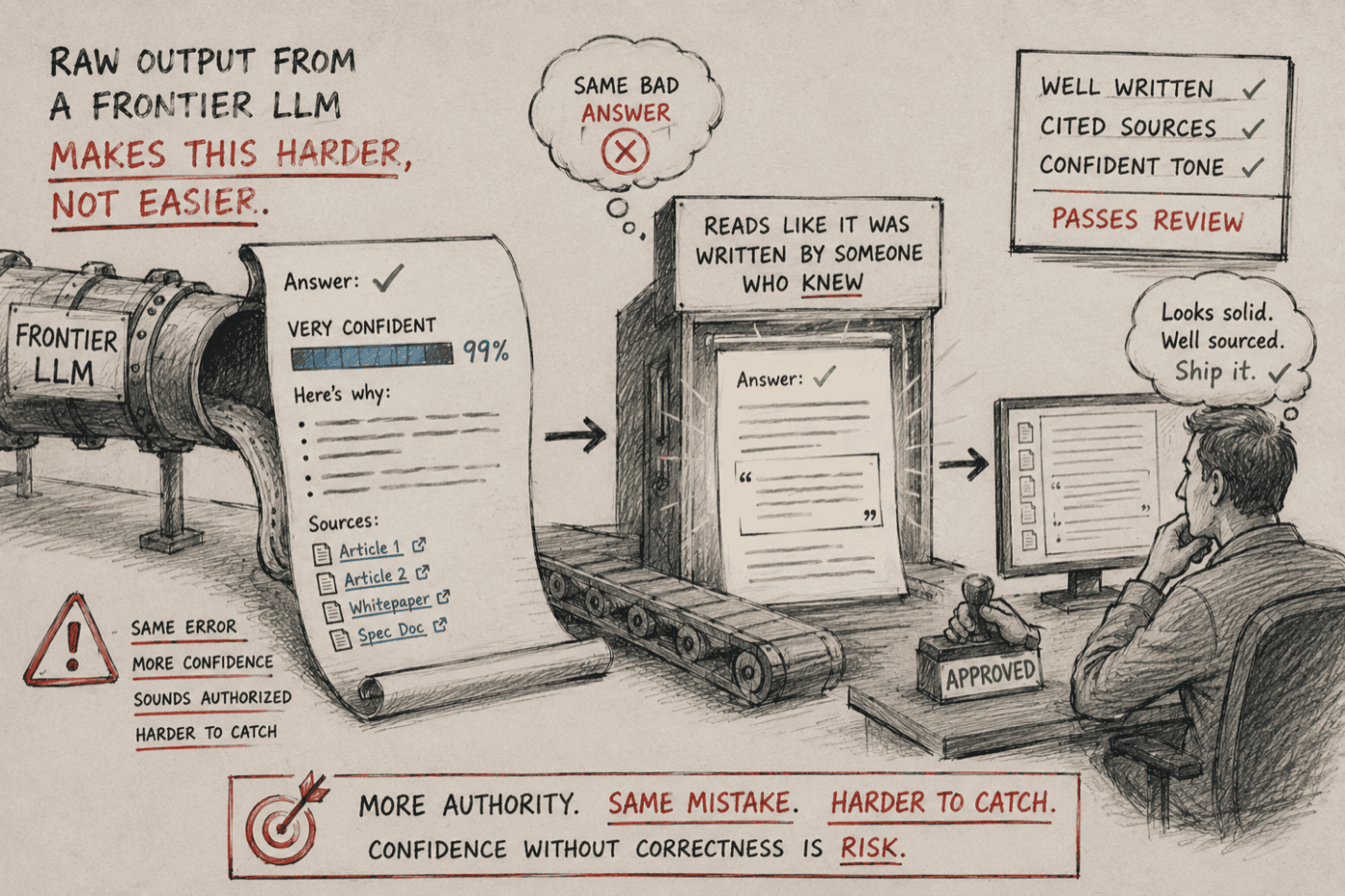
Validation goes hand by hand with accuracy. A regulated buyer has to be able to say afterward why the system gave the answer it gave. You can be right nine times out of ten and still fail that, and I’ve watched pilots die there after clearing every accuracy bar someone set.
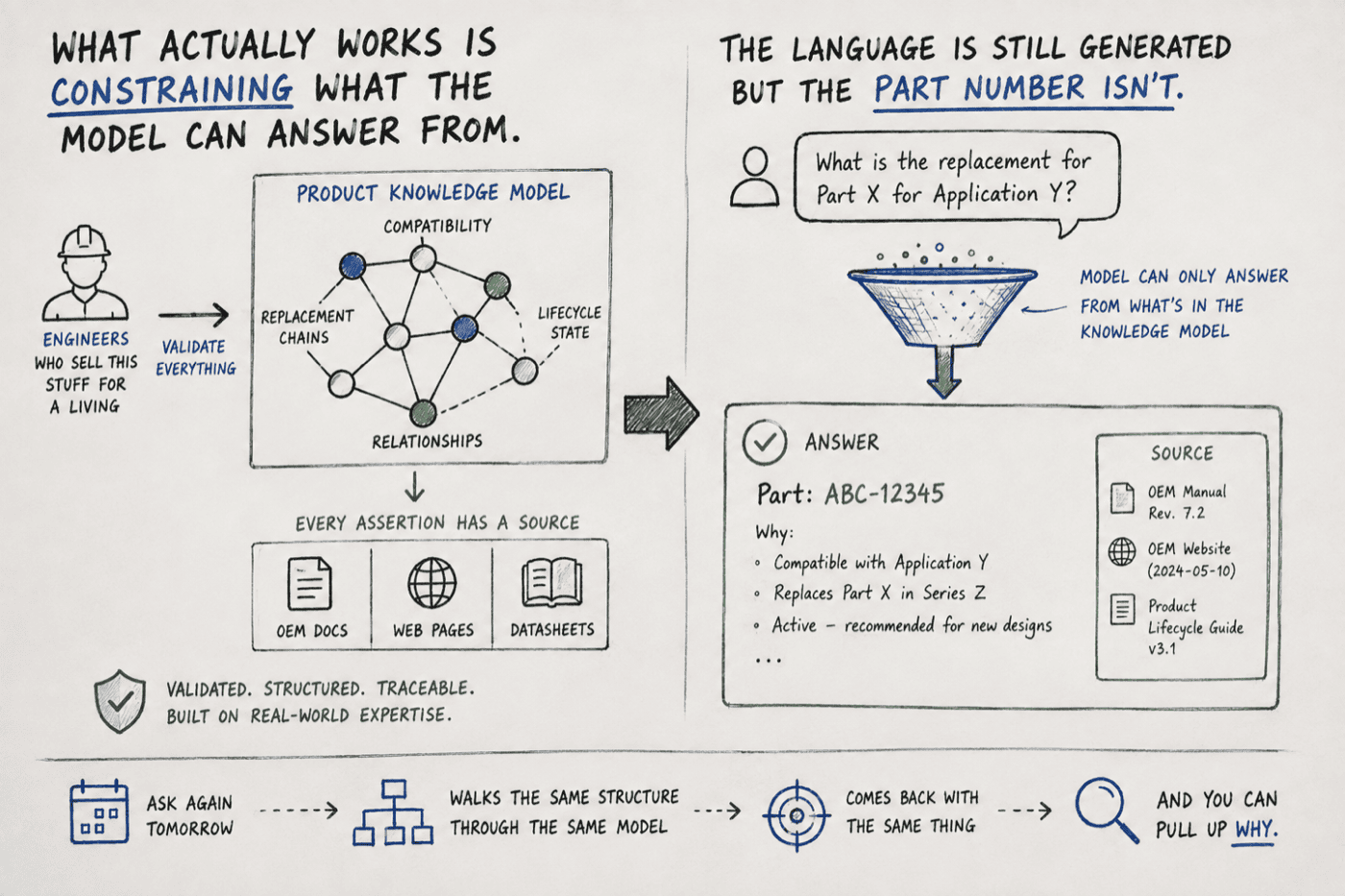
What actually works is constraining what the model can answer from. We model the product knowledge as relationships, compatibility, replacement chains, lifecycle state, and have engineers who sell this stuff for a living validate it, with the source attached to every assertion. The language is still generated but the part number isn’t. Ask again tomorrow and it walks the same structure and comes back with the same thing, and you can pull up why.
Side note, these knowledge graphs look beautiful!
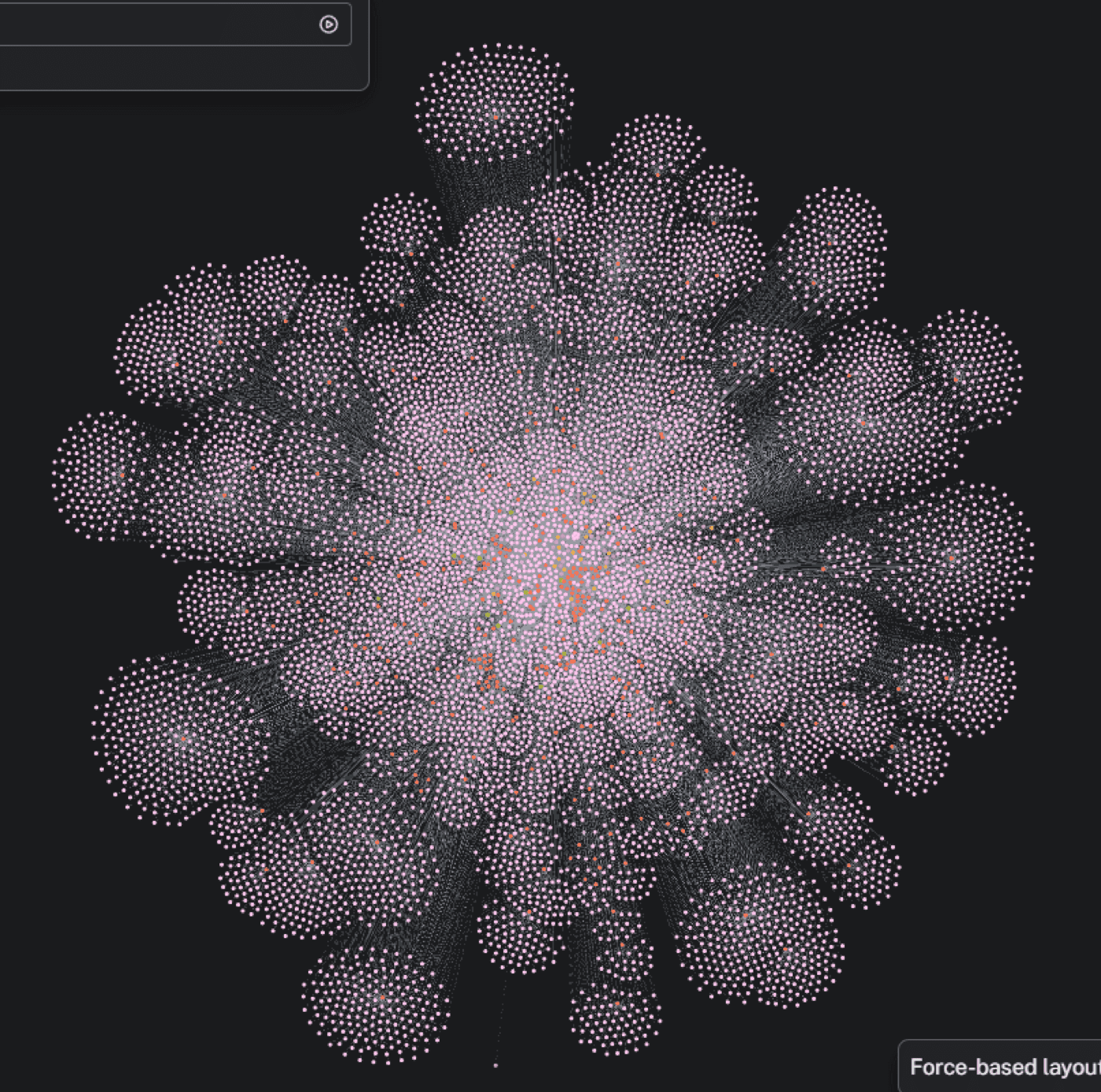
Knowledge Graph created by Reshape’s Knowledge Construction System for the leading company of bar code readers, mobile computers, sensors, vision and laser marking systems.
IoT Analytics also expects that, robotics aside, agentic AI platforms are the largest new market opportunity in smart manufacturing for the rest of 2026. I would read that as a warning as much as an opportunity. Money moving into a category attracts vendors who are good at demos, and the buying behavior described above exists because the last cohort of demos did not survive production.